Pasarrato
2023
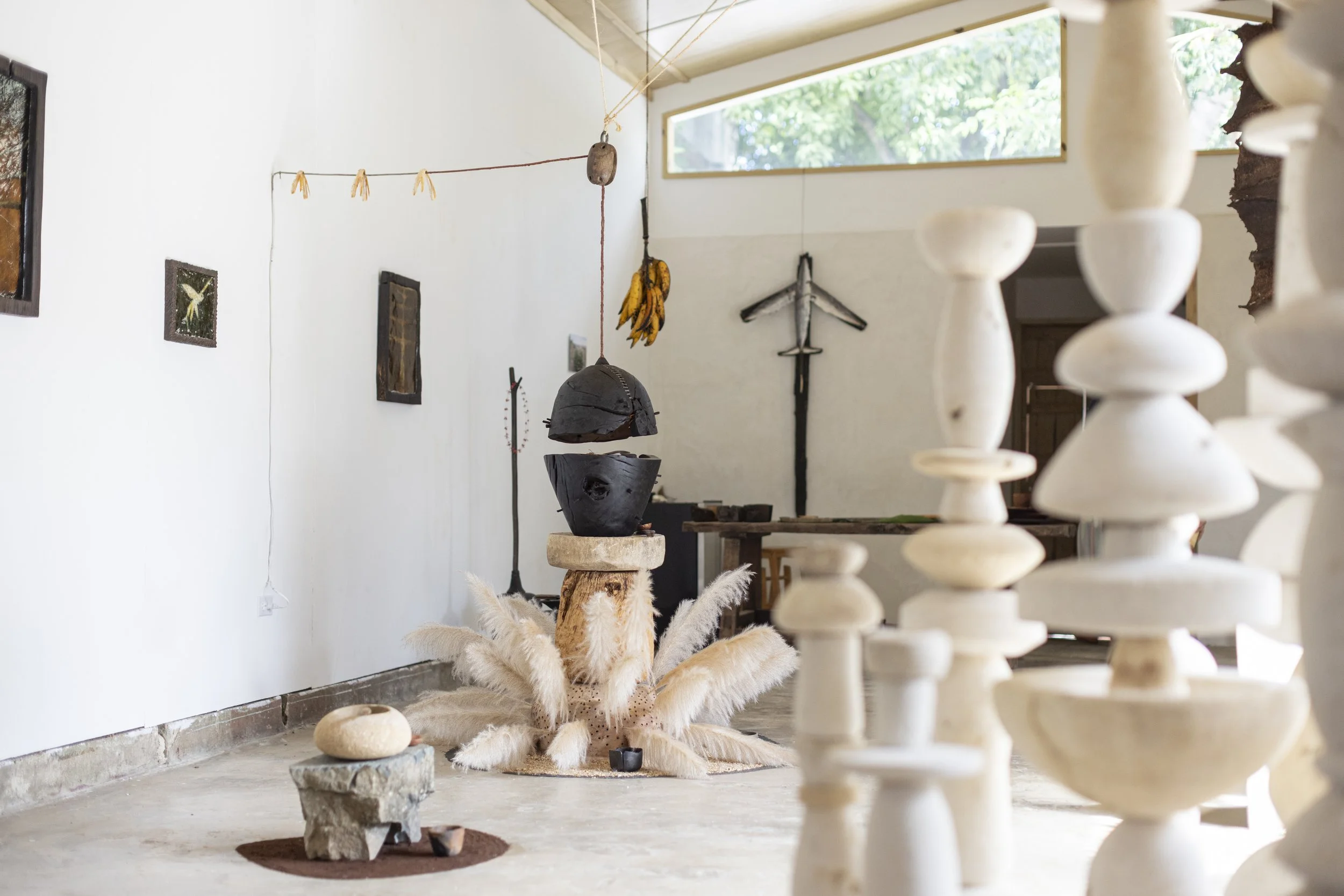
In October 2023, the San Juan 721 Art Residency Program hosted a creative exchange centered on the sea. Our goal was to foster a collaborative workspace that evolved through shared artisanal practices, marine knowledge, and reflections on fishing. This process culminated in the exhibition Pasarrato, featuring installation pieces that activated the gallery space through communal culinary experiences. Driven by a profound commitment to food justice and a sustainable coexistence with the natural world, the dishes and recipes we served were inspired by personal memories, anecdotes, and traditional fishing insights.
The creative vision behind this project began in our childhood, deeply embedded in the heart of a fishing community on the shores of Vega Baja. This body of work is born from a deep nostalgia for that coastal neighborhood where traditional yolas once lined the shores of Pasarrato Beach. Our grandparents' oceanfront home, which also housed our uncle’s fishery, served as a gathering place for the local community and the true anchor of our upbringing. There, surrounded by siblings, cousins, and friends, the sea became our classroom. Family and neighbors passed down the traditional arts of fishing: preparing bait, tying hooks, throwing the atarraya (cast net), setting traps, and casting lines. From the very beginning, they instilled in us a profound respect for ecological balance, teaching us the value of artisanal, sustainable practices.
If we were lucky, dawn would find us out at sea, trolling lines in our grandparents' small motorboat or hauling up nasas (fish traps) from the deep waters on our uncle’s vessel. On calmer days, we would cast hand reels from the boat ramp, waiting for the fleet to return at sunset so we could spend the evening scaling fish at the market. Life in this household meant learning to fillet the day’s catch, harvesting our grandfather's garden, and tending to his animals. Behind the fishery, in a workshop filled with the scent of sawdust and saltpeter, we learned the mechanics of boatbuilding just by watching our grandfather work. As we grew, the ocean called us further out; we took to surfing waves and freediving into the deep blue. We became captivated by the thriving reef just outside our doorstep, learning to interpret currents and tides with a speargun in hand on a single breath. Our youth in Vega Baja taught us that nature is not separate from us, but something to be seamlessly integrated into how we live, play, think, and create.
However, the traditional customs of this coastal fishing community began to fade with the onset of modern progress. The shoreline shifted rapidly, eroded by urban development, litter, sediment runoff, and the rising sea levels driven by global warming. Protecting what remained became our life's purpose as we grew older and more aware of ocean conservation, realizing that the massive schools of fish and legendary catches of our grandparents' generation were fading away alongside the elders themselves.
Today, Pasarrato Beach has lost most of its sand. The shoreline has eroded into a landscape of debris, cluttered by the rubble of buildings destroyed by heavy swells, hurricanes, and storm surges. Yolas can no longer launch from the beach and none remain. The tides rose just as we did, wiping out the fishermen’s settlement in a wave of commercial development. This shift has left no room for the local fishing trade that once supplied the entire area. In recent decades, human activity has exerted severe pressure on the marine ecosystem. The industrialization of commercial fishing has been one of the primary drivers of marine species decline globally; nevertheless, it remains the main supplier of the seafood consumed across Puerto Rico today.
Massive overfishing not only devastates marine life through bycatch and drives up carbon emissions, but it also treats the ocean as an inexhaustible source of corporate capital. These laws crush artisanal fishermen, extinguish traditional knowledge, and subordinate coastal communities through sanctions and seasonal bans. Such restrictions make self-sufficiency and food sovereignty nearly impossible, even though these traditional practices represent the only truly sustainable alternative for inhabiting the planet.
Our practice challenges the island’s dependence on imported food by transforming the San Juan 721 into a hub for seasonal culinary experimentation. Bringing artists, activists, farmers and fishermen together redefined what interdisciplinary collaboration could look like. These events use ancestral memory and artisanal traditions to advocate for food justice, while offering a space to reflect on how the loss of customs and heritage threatens coastal communities with cultural dissolution.
The continuous activation of the residency space allowed participants to share produce, ideas, techniques, and culinary resources rooted in ecological responsibility and self-reliance. By sharing knowledge of native species and their habitats, the project nurtured sustainable solutions for food sovereignty, helping new community models thrive through an exchange of experiences and memory. This dialogue directly fed into the evolving art installations within the gallery. It reflected a lifestyle that harvests mindfully from nature by connecting the sea to the garden, the garden to the table, and the table back to the community. Shared in gratitude with every visitor, the experience felt like a warm afternoon among friends: a pasarrato filled with great conversation, fresh local fish, and fond recollectons of growing up by the sea.